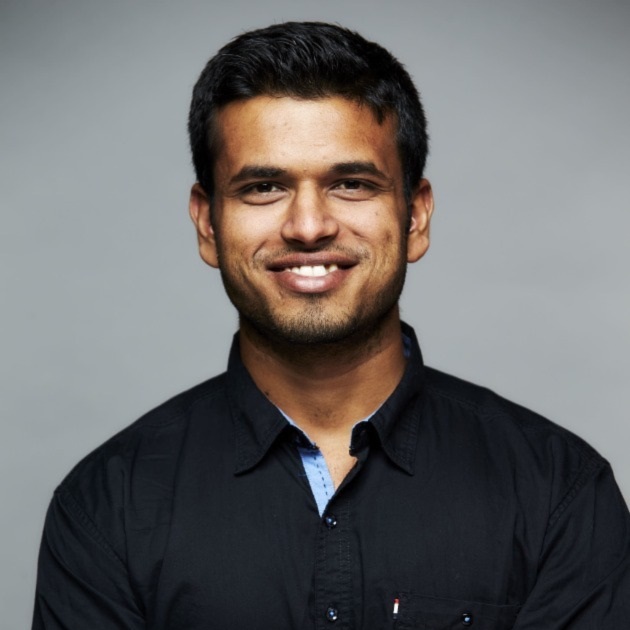


Fueled by the global experiences he built in the Naveen Jindal School of Management, Vladyslav (Vlad) Wallace, BS’20, now represents the United States on the world stage.

Right on the heels of a formative experience with the U.S. State Department’s National Security Language Initiative (NSLI) program in Chisinau, Moldova, Wallace arrived at The University of Texas at Dallas with a newly budding interest in international service. The BS in Global Business degree at the Jindal School gave him the structure, mentorship and exposure he needed to turn that interest into a concrete career path.
“I had originally entered UT Dallas as a biology major, but I quickly realized that JSOM was a much better fit for my evolving goals,” he said. “It allowed me to explore a wide range of international careers at the intersection of commerce, policy and diplomacy.”
A Globally Focused Curriculum Takes Hold
Through the Jindal School’s globally-oriented curriculum, Wallace was able to take courses that examined international business, governance and cross-border cooperation.
“I was strongly encouraged to study abroad and pursue internships overseas,” he explained. “Thanks to those experiences, I moved from a general fascination with ‘international work’ to a much more grounded understanding of what specific roles and career tracks actually look like. Over time — and through a somewhat serpentine journey of programs, exchanges, and internships — I came to see that the Foreign Service offered the ideal blend of public service, international engagement and problem-solving that I was looking for.”
The Jindal School, he said, did not just validate his interest in international service; it gave him the tools and confidence to ultimately pursue a career as a U.S. Foreign Service Officer in Guayaquil, Ecuador, where he is now stationed.
“The study-abroad experiences and overseas internships I completed were absolutely central to shaping both my worldview and my professional readiness,” he said. “Each experience layered on new perspectives about governance and institutions, and together they gave me the confidence to build a career in international service.”
Building a World of Experience
Having graduated from Plano West Senior High School in 2015, Wallace’s first international internship with Youth For Understanding (YFU) in Tallinn, Estonia, introduced him to the practical side of intercultural exchange and showed how educational and cultural programs can quietly advance diplomatic goals.
Wallace enrolled at UT Dallas in 2016. Soon after that, he enrolled as an exchange student for a semester at EmLyon in Saint-Étienne, France, and then while continuing his French language studies and certification at the Université Nice Sophia Antipolis, he said he gained a deeper appreciation for European approaches to business policy and diplomacy, all while strengthening the language skills that he recently had an opportunity to use during his time at the U.S. Embassy in Kinshasa, the Democratic Republic of the Congo.
A Turning Point in Latvia
After France came the most pivotal phase of his undergraduate career: a year in Riga, Latvia. This was another exchange-student experience for Wallace, this time studying at the University of Latvia and working concurrently at Transparency International. He said that experience was a turning point for him.
“There, I worked on anti-corruption research and best-practice frameworks for national governments, which gave me firsthand insight into how governance, civil society and international norms interact on the ground,” he said. “I capped my time at UT Dallas with a semester in Washington, D.C., as part of the Bill Archer Fellowship program, which allowed me to connect those international experiences back to U.S. policymaking and ultimately solidified my decision to pursue a career with the Department of State.”
Collectively, these experiences taught him how to adapt to new environments, work across cultures, think critically about institutions, and communicate effectively in multiple languages, he explained.
“They did not just broaden my worldview,” he said. “They prepared me practically and mentally for the realities of life and work in the U.S. Foreign Service.”
From Classroom Learning to Professional Momentum
Engaging in multiple international opportunities through the Global Business Program allowed Wallace to not only see the world but also understand it from different cultural and professional angles. Those experiences prepared him not just academically, but professionally.
“They gave me a competitive edge when I graduated and relocated to Washington, D.C.,” he said. “My background made it possible to step into a role at Charities Aid Foundation of America (CAF America), where I worked for nearly two years supporting cross-border philanthropy and international nonprofit work. When I later applied for the Thomas R. Pickering Foreign Affairs Fellowship and to the Master in Public Policy (MPP) program at the Harvard Kennedy School, I was able to demonstrate not just academic performance, but a sustained and diverse record of engagement abroad, comfort in cross-cultural settings, and a clear trajectory toward public service.”
Having more than one global experience signaled to selection committees that his interest in international affairs was not fleeting or theoretical — it was tested and grounded in real-world work and study.
“That combination of depth, consistency and demonstrated commitment is ultimately what differentiated me as a candidate for graduate school and foreign service fellowships,” Wallace said.
Academic Training That Travels
Coursework in international economics, cross-cultural management and global strategy has been directly applicable to his work as a diplomat and time as a graduate student.
“International economics not only helped me understand macroeconomic trends that shape U.S. policy and host-country priorities, but it also prepared me extremely well for the economics-heavy curriculum I later encountered at the Harvard Kennedy School,” he said. “Cross-cultural management trained me to navigate different communication styles and cultural expectations — skills I use daily when engaging with local counterparts and the public in Guayaquil. Finally, global strategy courses taught me to think in terms of long-term interests and stakeholder mapping, which is exactly the mindset required to help advance U.S. foreign policy objectives on the ground.”
Putting Adaptability Into Practice
Wallace shared a moment in which skills he developed in the Global Business program, which emphasizes adaptability and cultural fluency, made a significant difference to him.
“One pivotal moment was during my Foreign Service Oral Assessment (FSOA) as part of the Pickering Fellowship,” Wallace explained. “The assessment is designed to test not only analytical ability, but also how well candidates can operate in complex, cross-cultural environments. Thanks to the range of experiences I had living, studying and working overseas — many of which were set in motion by the Global Business program at JSOM — I was able to draw on concrete examples of adapting to unfamiliar settings, navigating cultural nuances and building rapport across differences.”
During group exercises and interview components of the FSOA, Wallace said he leaned heavily on the skills he first developed at JSOM: listening carefully, reading the room, shifting communication styles and finding culturally appropriate ways to solve problems.
“Those experiences allowed me to demonstrate that I was not just theoretically interested in international work, but that I had already lived it,” he said. “That combination of adaptability and cultural fluency was a key factor in successfully passing the exam and ultimately entering the U.S. Foreign Service.”
A Double Major with Double Impact
Wallace paired Global Business with a second major — International Political Economy — from the School of Economic, Political and Policy Sciences.
This double degree “gave me a uniquely well-rounded foundation for both graduate study and a career in the U.S. Foreign Service,” Wallace said. “Global Business equipped me with practical tools to understand how to think strategically in an international marketplace. International Political Economy complemented that by focusing on the policy, governance and institutional dimensions behind those economic relationships: how states, markets and international organizations interact and sometimes collide.”
Together, these two majors allowed Wallace to approach global issues from both a commercial and a policy lens, which proved invaluable during his economics- and policy-heavy MPP studies at the Harvard Kennedy School.
“That combined perspective now serves me daily in the Foreign Service, where I have to understand not just what is happening in an economy, but why it matters politically and how U.S. policy can most effectively respond,” he explained.
Advice for Future Global Business Leaders
Wallace advises current and prospective students at the Jindal School to be proactive and creative in shaping their own path.
“Do not limit yourself only to the opportunities that are already neatly packaged,” he explained. “Instead, use the Jindal School as a launchpad to build the experiences you want. For example, the University of Latvia was not a formal exchange partner with UT Dallas when I decided I wanted to study and work there, but that did not stop me. I worked with JSOM advisors to build a study abroad curriculum that fit my degree requirements and actively sought out funding opportunities, including the IEF Scholarship, to make it financially feasible.”
He encourages students to do the same: pursue internships abroad, apply for scholarships and fellowships, invest in language learning, and make full use of JSOM’s advising and resources.
“The most meaningful international careers often grow out of a combination of structured programs and self-initiated opportunities,” he said. If you are willing to do the extra legwork — ask questions and design your own experiences — you will graduate not only with a degree, but with a compelling story and a powerful toolkit for working on the global stage.”
A Global Education Made Accessible
Finally, Wallace added just how grateful he is for how accessible the Jindal School made a global education for him.
“I relied heavily on financial aid and funding opportunities, and if it had not been for the scholarships like the Diversity Scholars Program, program support and flexibility I received at UT Dallas, there is no way I would have been able to study or intern in places like Estonia, France, and Latvia,” he explained. “Those experiences were not just ‘nice extras’, they fundamentally changed the trajectory of my life and made a career in international service possible.
“I also think it is important to underscore that you do not have to come from a so-called ‘traditional’ foreign policy or Ivy League pipeline to end up in places like the Harvard Kennedy School, the Pickering Fellowship or the U.S. Foreign Service. UT Dallas and the Jindal School gave me rigorous training and incredible opportunities to figure out who I wanted to be in the world. If anything, my path shows that students from UT Dallas can not only compete on the global stage but lead on it.”
A Director’s Perspective

Hubert Zydorek, a professor of instruction in the Jindal School’s Organizations, Strategy and International Area, said any college student should take advantage of multiple international opportunities during their academic journey.
“International experiences are life-changing because they push students beyond familiar environments and allow them to explore diverse paths while building independence, resilience, confidence and many other transferable skills and competencies necessary in today’s complex global environment,” said Zydorek, who served as director of the BS in Global Business Program while Wallace was a student. “Living, studying and working in different countries allows students to build a versatile set of skills as well as global mindset that enhances their employability and leadership potential.”
Zydorek said Wallace demonstrated strong initiative and global curiosity by taking ownership of designing his international path.
“His determination, persistence, and adaptability have driven his success,” Zydorek said. “Congratulations, Vlad!”