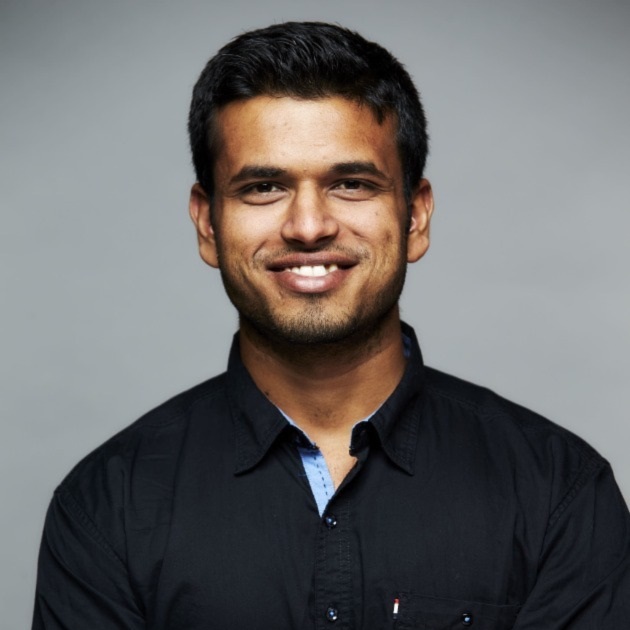


A graduate of the Naveen Jindal School of Management’s Executive MBA program has taken on a role that highlights his career success and the school’s growing alumni influence.

Marc Chase, EMBA ’99, has been named leader of Grant Thornton’s Private Equity practice. He will lead strategy, growth and operations in a highly competitive segment of finance.
Chase said the new role is both an honor and an energizing challenge.
“I’m excited to bring clarity and discipline to a space where speed and precision matter most,” he said. “Private equity calls for equal parts vision and execution, and I look forward to helping our clients find value through sharper diligence, stronger operations and smart growth.”
What motivates him most, he added, is building a culture of accountability and insight in which partnerships are guided by practical advice, measurable results and transparency.
For the Jindal School, Chase’s appointment is another example of the impact of its Executive MBA program. Its graduates are advancing into leadership roles at major firms and shaping entire industries.

John Barden, dean of Executive Education at the Jindal School, said an Executive MBA is more than just a credential — it is a strategic accelerator for leaders aiming to step into high-profile, prestigious roles in the C-Suite.
“EMBA students at the Jindal School develop executive presence, which emphasizes communication, influence and key traits for boardroom leadership and public-facing roles,” he said. “They also are trained how to make decisions under pressure. The EMBA curriculum focuses on case-based learning from which students take away lessons in solving practical, theoretical and complex issues in high-stakes environments. Marc has taken those lessons to the next level.”
Barden said that he is pleased to learn about Chase’s plan to engage more with the Jindal School’s alumni network.
“Our alumni network is one of the most powerful assets you can gain from studying at the Jindal School,” he said. “It’s not just about who you meet, but how those relationships evolve into strategic alliances, boardroom introductions and lifelong mentorships. Reengaging with it will certainly benefit him. At the same time, having an alumnus of Marc’s stature will no doubt elevate the Jindal School’s brand.”
Chase said he had been driven throughout his career to turn complexity into clarity and build processes that can deliver measurable impact.
“Early on, I found myself drawn to roles where I could bridge sales, strategy and execution — whether diagnosing operational gaps, designing growth frameworks or aligning cross-functional teams around shared outcomes and relationships. A key turning point was my own foray into the private equity world as a general partner. I was consuming the very services I once provided.
He added that he benefited from this perspective because he began seeing how different firms approached him as a client.
“Some were advisors investing in the relationship with no known tangible benefit and some were merely service or product salespeople attempting to hit a quota,” he said. “I developed a newfound empathy for private equity professionals’ challenges and modified how my team serves the client base.”
Chase said his team approaches each situation with confidence in their capabilities but also with the judgment to recommend competitors when doing so can serve the client’s long-term interests.
“It’s the subtle difference between ‘doing things right’ and ‘doing the right thing,’” he said.
Chase said his Executive MBA experience at the Jindal School trained him for leadership because it gave him the tools to be able to see the bigger picture.
“I learned how strategy, operations, finance and leadership all connect,” he said. “But more than that, it sharpened my ability to lead with clarity and confidence, especially when the stakes are high, and the timelines are tight.”
One course in particular stood out: Organizational Behavior (OB6301). Even though he had not expected to enjoy it, it left a lasting impression on him because it helped him understand why organizations resist change.
Two assignments that stood out from that course include a race-team simulation that he called “highly enlightening and pivotal,” and a media training exercise that placed him in the role of an executive responding to media under pressure during a crisis.
“Great training,” he said, noting how both experiences shaped his perspective on leadership.
Having moved back to the Northeast in 2004, Chase immersed himself in the private equity ecosystem in New York. Because of that, he has not tapped into his alumni network as much as he should have — but plans to change that soon.
“That’s on me, and I suspect I’ve missed out because of it,” he said. “I genuinely hope to change that by giving back in a meaningful way — whether it’s offering guidance to undergrads exploring careers in private equity or maybe even stepping into an adjunct role down the line. It would be a real privilege to support the next generation.”
As for current Executive MBA students or early-career professionals aspiring to reach the C-suite, Chase had some words of advice and encouragement.
“Many of the lessons I’ve learned may sound familiar — but that’s because they matter,” he said. “Take smart risks. Speak up with clarity and conviction. Don’t wait for opportunity to knock — build it, whether within your organization or beyond. Share the spotlight and promote the skill sets and successes of those around you. And above all, focus your energy where it drives real impact. Time is too valuable to spend on work that doesn’t move the needle.”
His immediate priority is to define how the practice acquires, manages and delivers value consistently across client relationships and related investments.
“This means creating outcome-based processes, defined accountability and systems of reward and repercussion systems that drive behavior toward client outcomes,” he said. “Many people talk about recognition, but you seldom hear of repercussions. Like life, there should be both. If professionals act counter to the client or firm’s interest, there should be no reward associated with that behavior and potentially, even a demerit in their compensation or delay in their ability to ascend to the next role.”
Besides the ever-present push for tighter presentations and deeper diligence, Chase said the consulting profession is being shaped by a few big forces.
“Speed is no longer a luxury—it’s a mandate,” he said. If your firm has no sense of urgency and can’t match the time clock on deals — this is not the industry for you. Firms want sharper insights faster, which means consultants need to be part strategist, part data ninja. Second, value creation is getting more granular; it’s not just about cutting costs or scaling —it’s about finding hidden levers in sales enablement, CRM hygiene, and innovative processes on growth. And of course, AI is the new intern: tireless, occasionally brilliant, and still learning how not to hallucinate. The challenge is staying rigorous while embracing tools that can accelerate—but not replace—judgment. So yes, the future is fast, fragmented, and full of acronyms. But it’s also a great time to be in the business of clarity.”
Finally, Chase pointed to Walt Whitman for inspiration, quoting from “O Me! O Life!”: “That the powerful play goes on, and you may contribute a verse.” His message to the Jindal School community: make sure your verse counts.